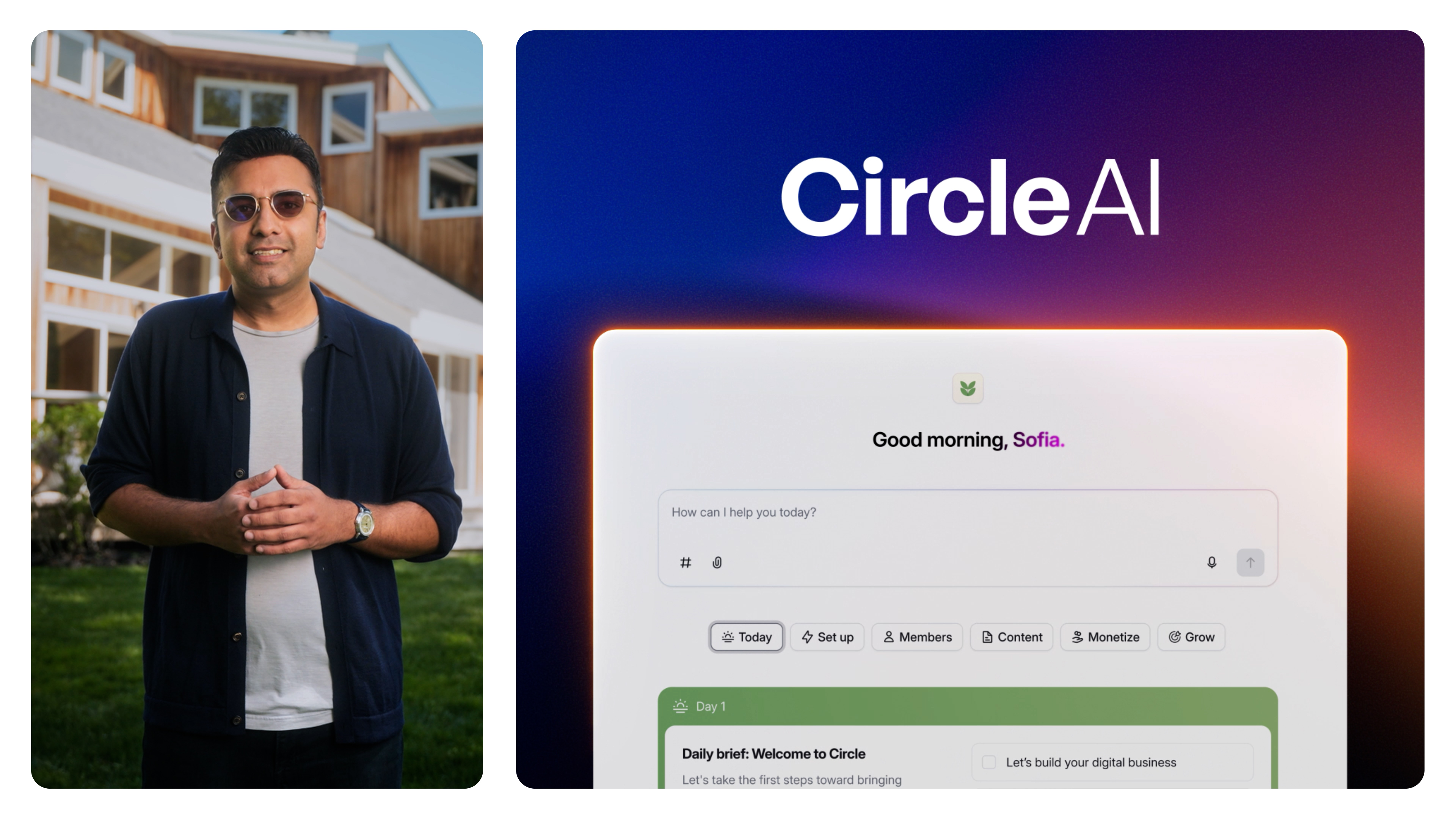
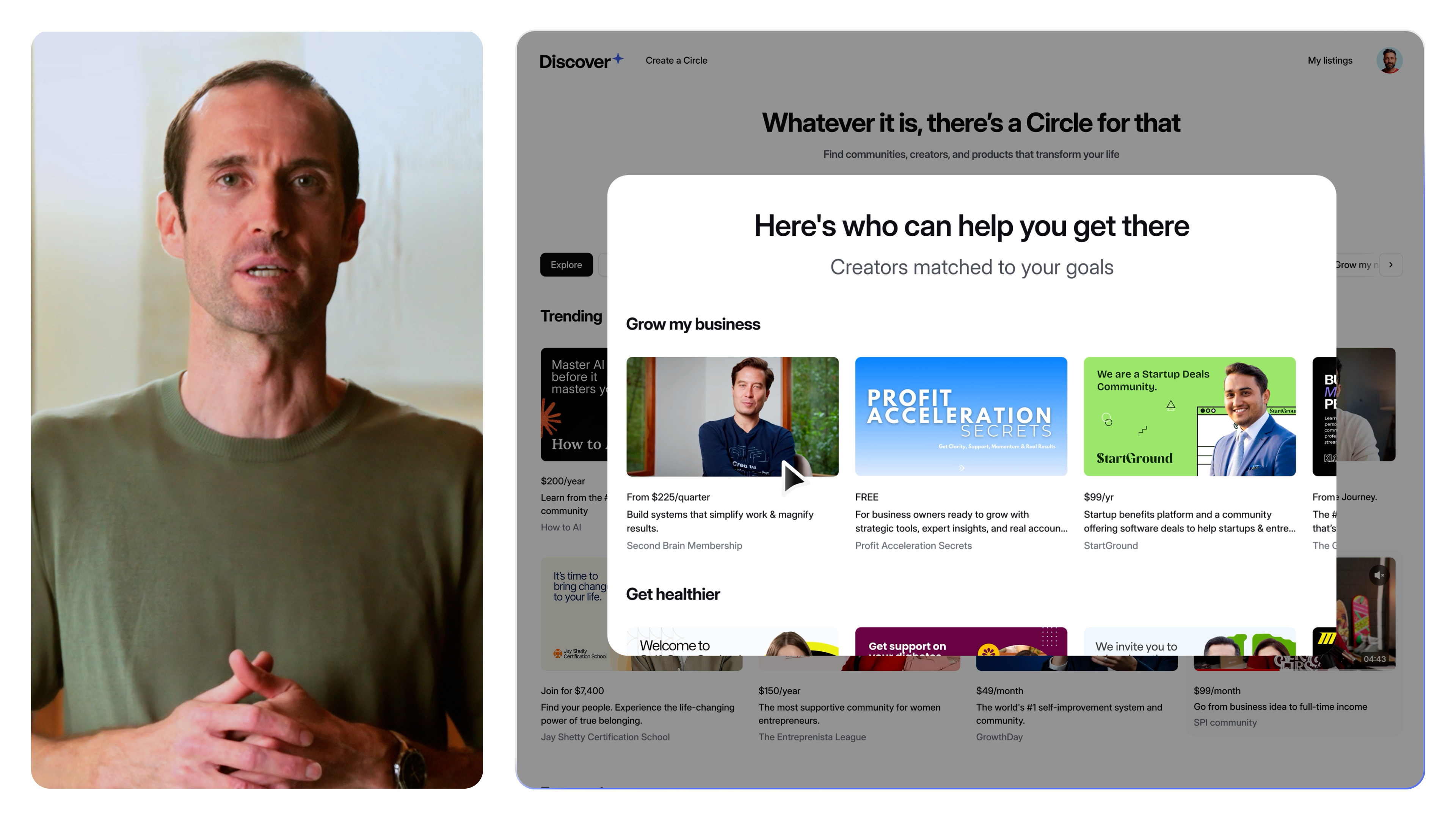
Circle | Keynote launch film
Project Eclipse Keynote
- Format
- Keynote launch film
- My role
- Brought back by the founders after an outside agency failed to deliver. Producer and director, running the shoot and the parallel post workflow.
- Location
- The Hamptons, New York
- Shoot days
- 1
- Crew
- Small senior crew
- Delivered
- 20 minute keynote film delivered in 25 days, with 5 to 6 original music tracks
- Package
- One private residence, four rooms, four founders on camera
- Budget band
- $25K to $50K production, inside a $100K+ campaign
Twenty-five days before the biggest launch in Circle’s history, the founders called and asked if I could reshoot the whole thing.
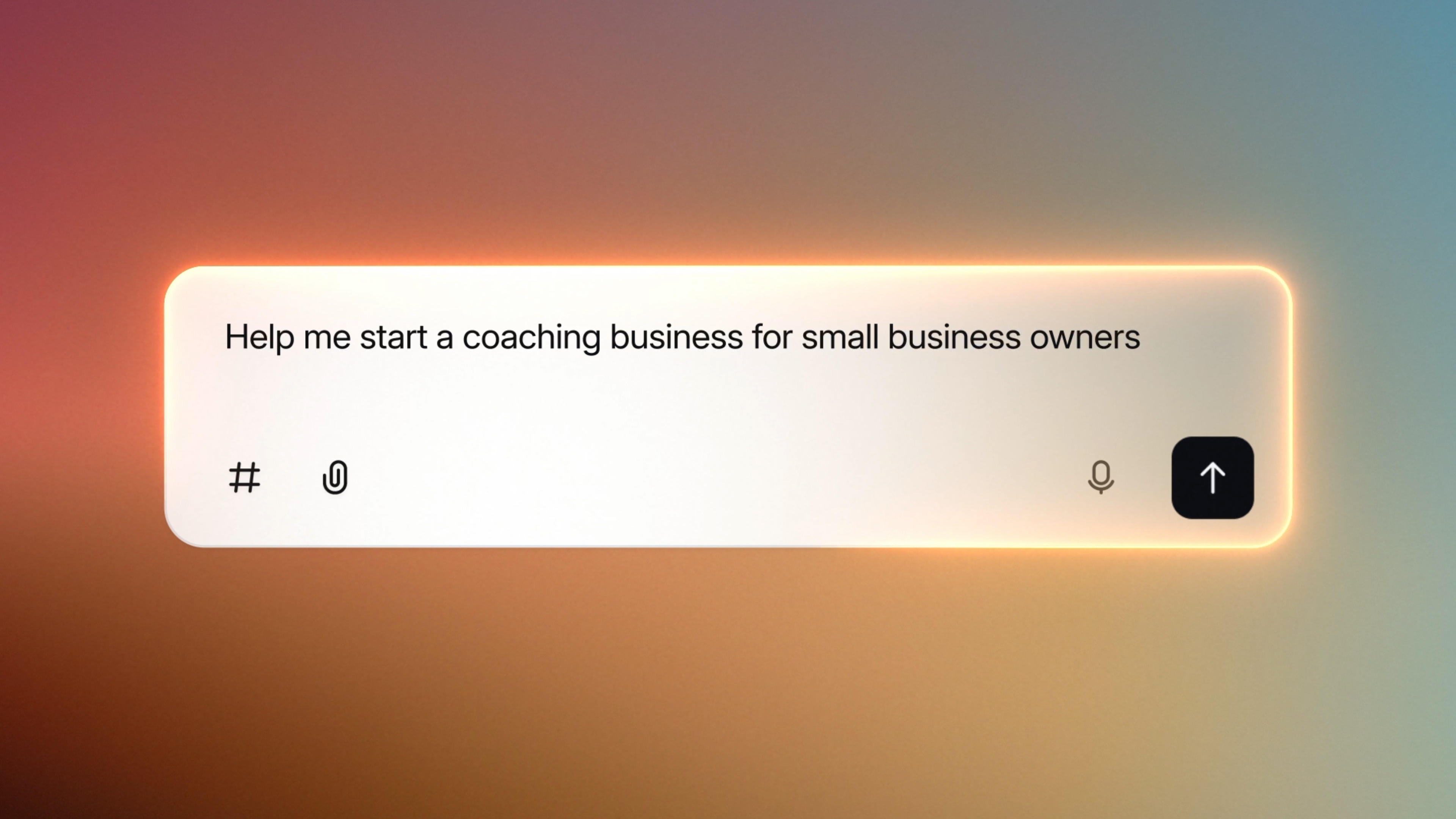
Project Eclipse announced Circle 4.0 and Circle AI. It was the company’s largest launch film.
The original plan was ambitious. An LED volume stage, a twelve person crew, two shoot days. We took it all the way through pre-production and then shuttered it. The plan was bigger than the film needed to be.
Circle and the founders brought in an outside video production agency instead. What came back was not the film the launch needed, and by then the calendar had eaten most of the runway.
So the founders came back to me. Twenty-five days on the clock, a date that would not move, and one question: can you make this work.
Their answer to where was the Hamptons. One house, four founders, no second chance.
Here is exactly how we did it.
When should you reshoot instead of fixing it in post?
The first instinct is always to fix it in post.
Tweak the color. Recut the pacing. Change the music. Add graphics. Try one more version.
Sometimes that works.
Sometimes the problem is baked into the footage.
Camera height. Eyelines. Room energy. Performance. The feeling that the people on screen are not landing. Those are not edit problems. They are production problems.
The better question is not, “Can we save this?”
The better question is, “Would we want this to represent the launch?”
Our answer was no.
So we stopped trying to polish the wrong thing.
One house, one day, no second chance
The launch date was not moving.
That meant the shoot had to fit into one day.
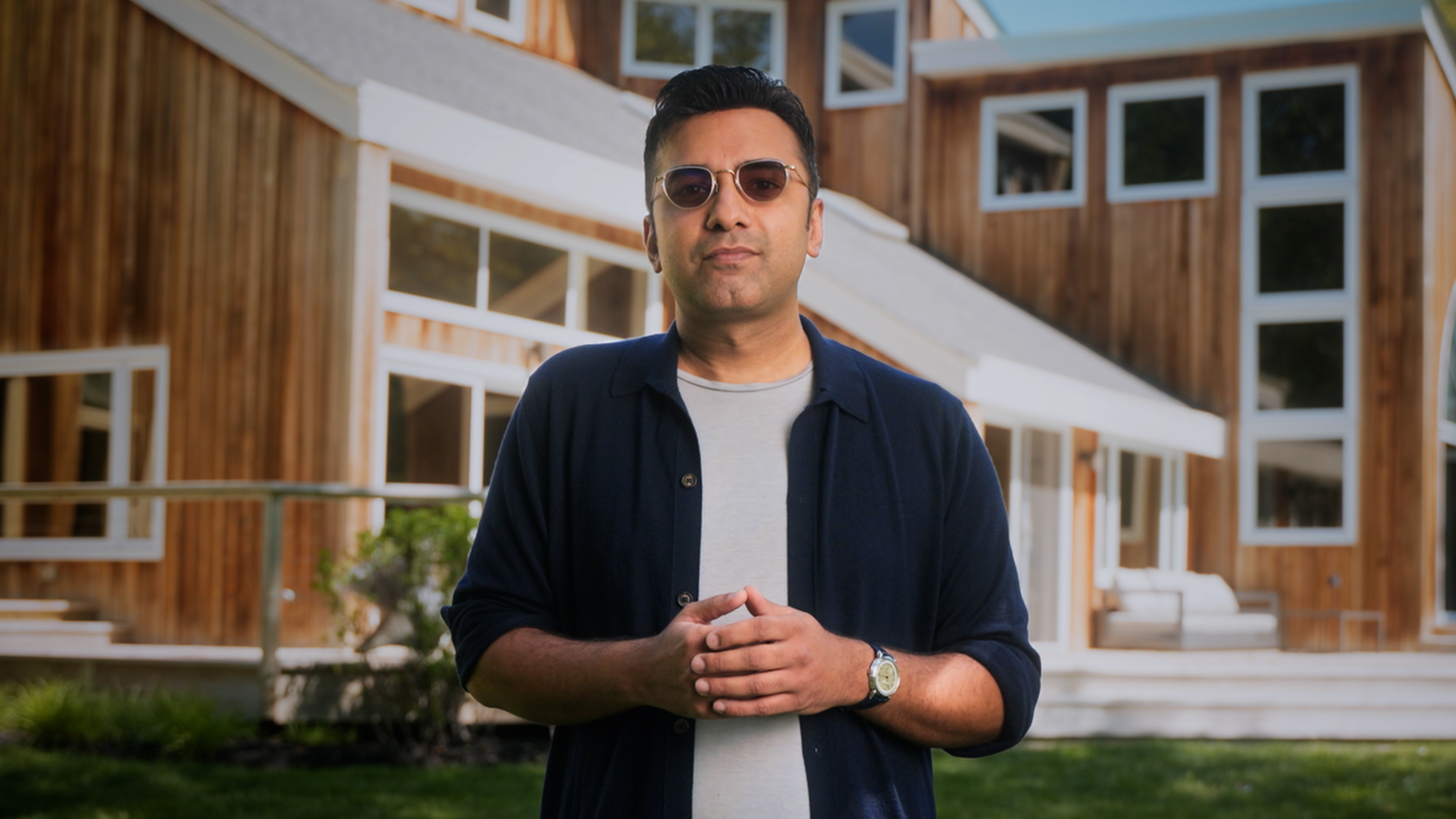
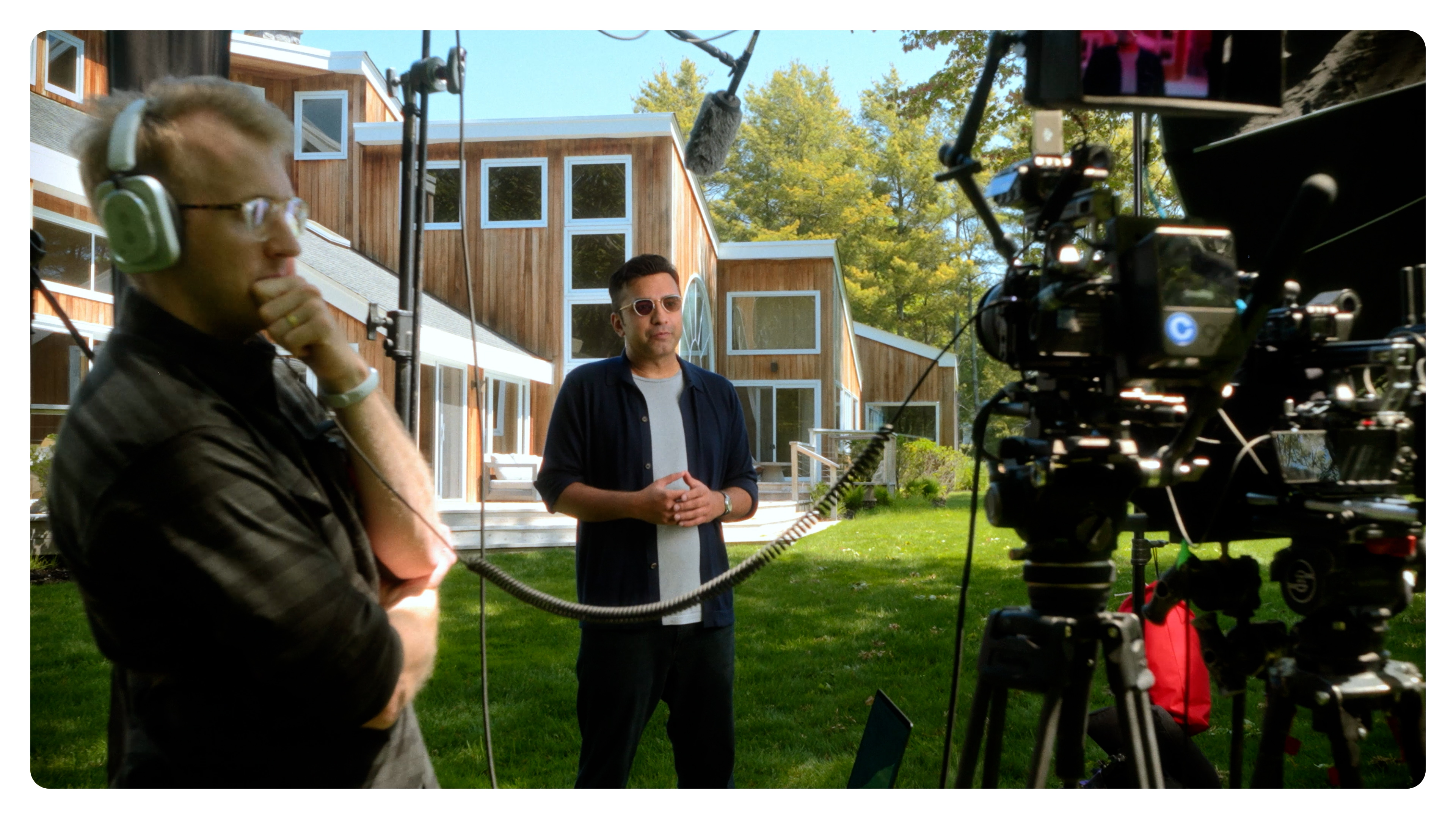
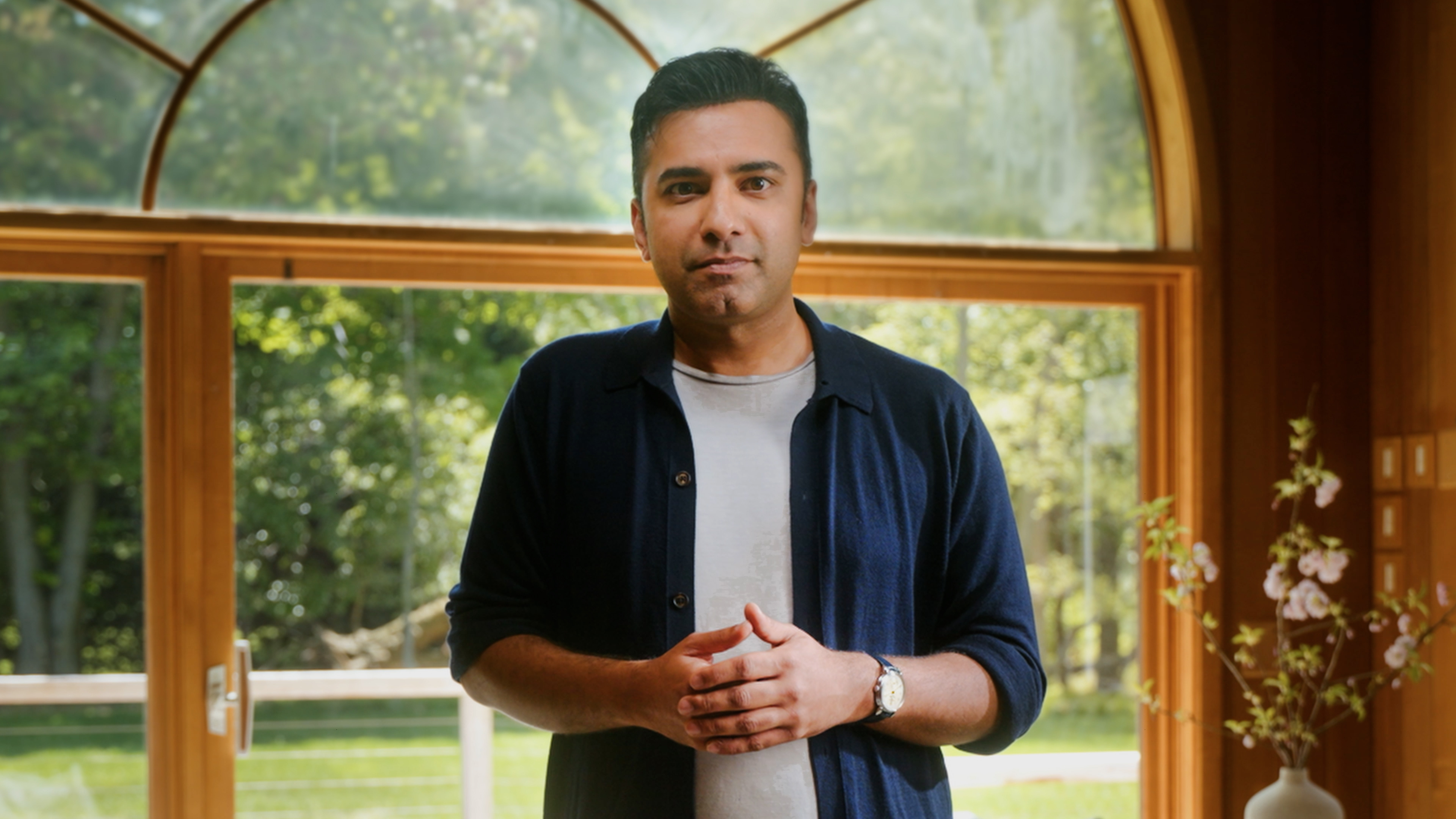
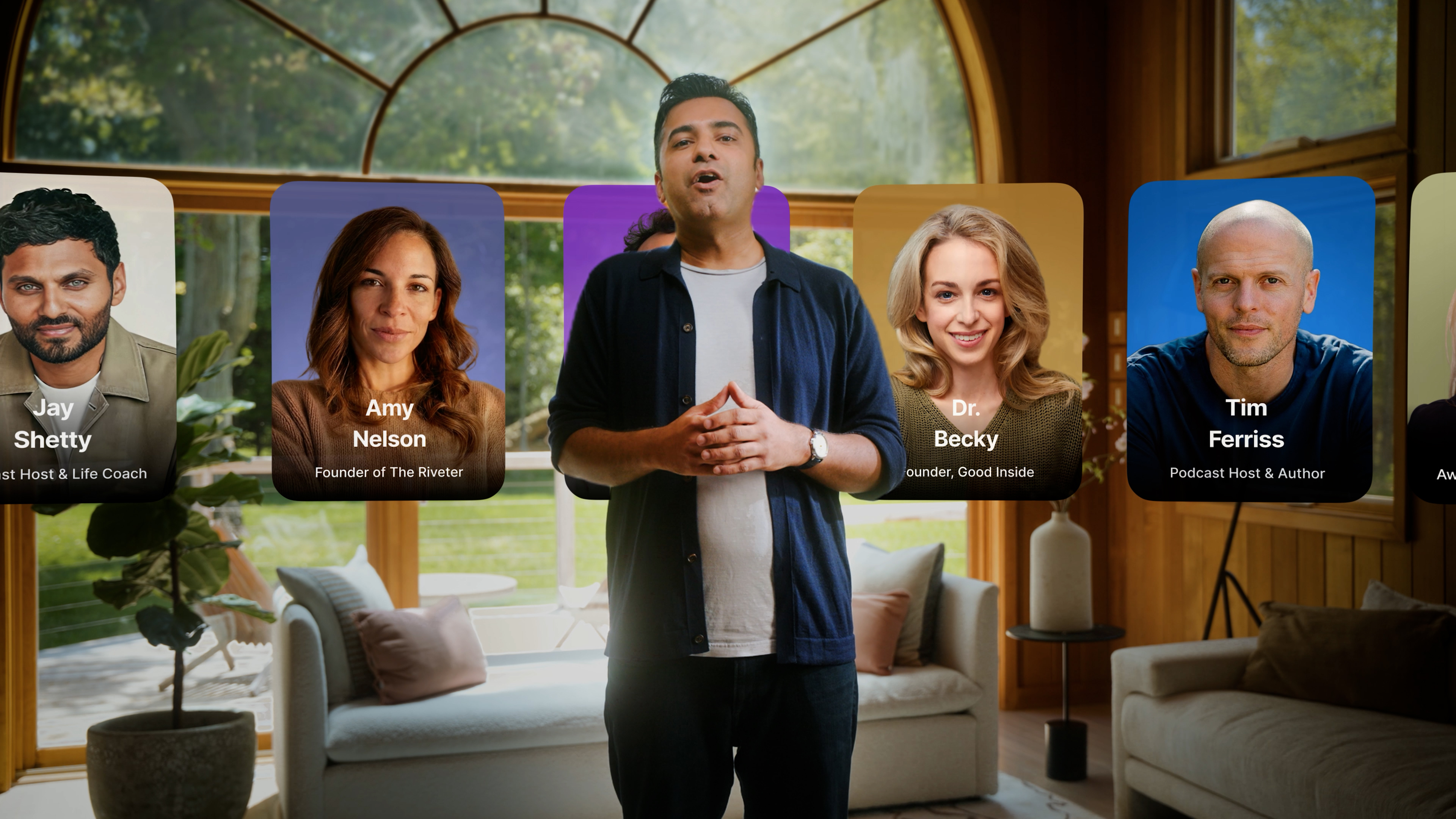
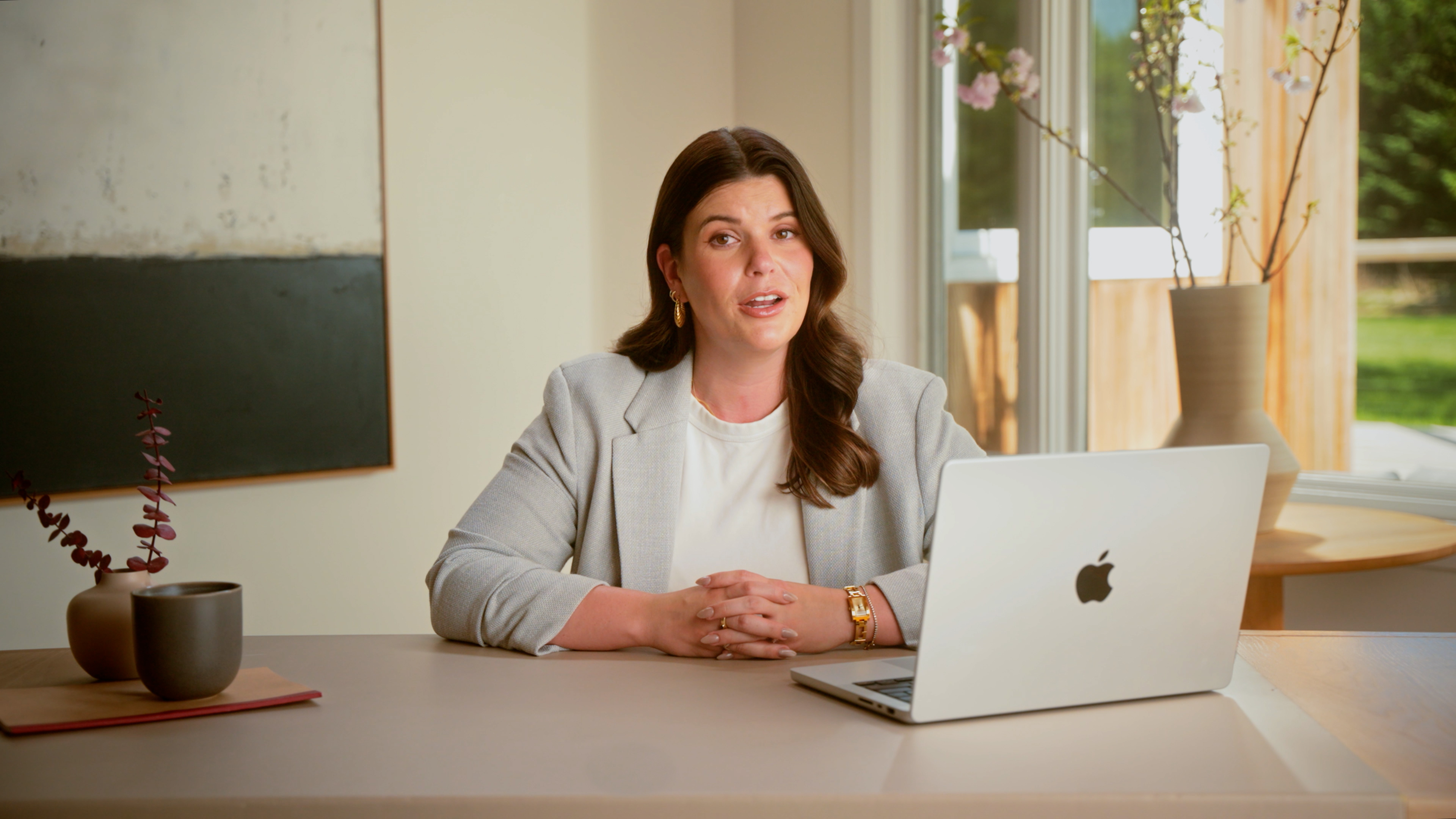
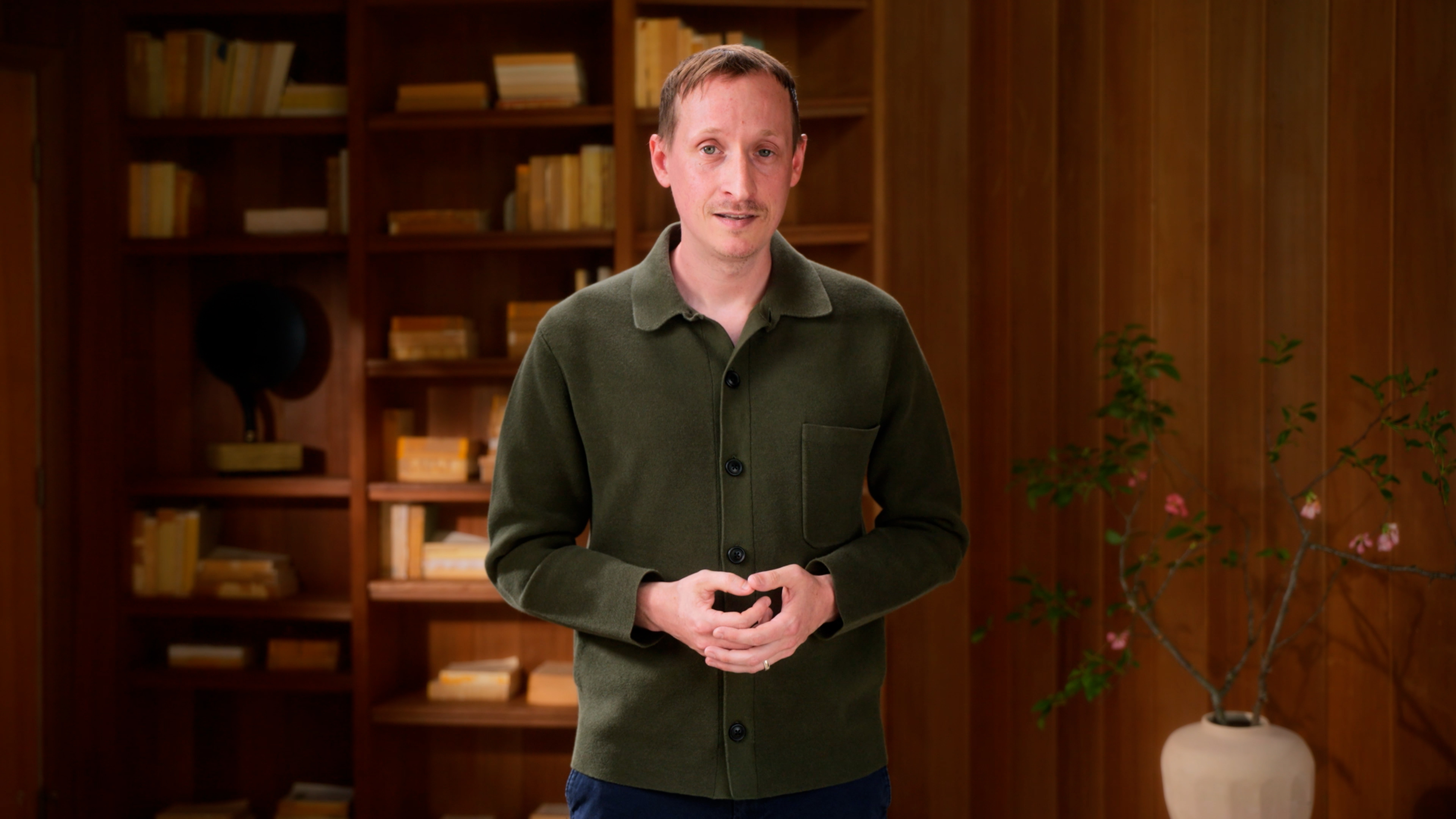
We took a private residence in the Hamptons with multiple rooms, good natural light, and enough warmth to feel human. Four founders came in as on-camera talent. One house. One day. Four principals. No second shoot day.
That sounds like a problem.
It was actually the thing that made the day work.
Constraints cut the noise. There was no “we’ll get it tomorrow,” because there was no tomorrow. Every setup had to earn its place. Every room had to serve the film. Every move had to be fast.
One good location beat three complicated ones.
The crew mattered
A shoot like this lives or dies on the people in the room.
Chris Tharp shot it as DP with his team from Tharp Films. A keynote is still a people film, even when it is about software. The founders had to look present, sharp, and comfortable. That starts behind the lens.
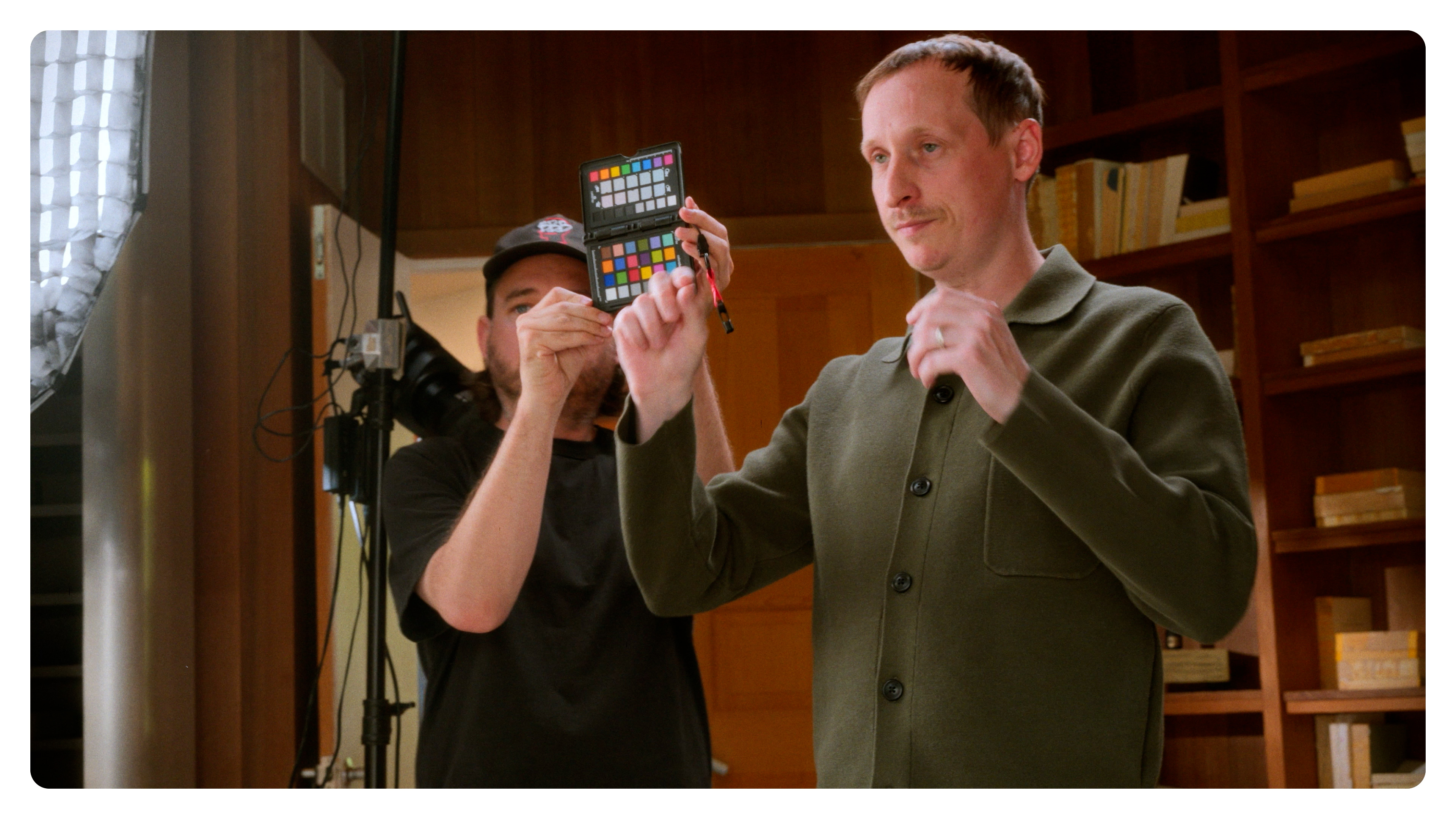
Todd Rawizser ran lighting. Real houses are annoying to shoot in because no room was built for your camera. Todd shaped each space fast and made the rooms feel like one film.
Christian Quintana handled grip. On a day like this, grip is not a support role. It is the hinge. Every fast room move gave us more time with the founders.
Todd Schmiedlin shot behind the scenes. That footage gave the edit texture later. Not decoration. Breathing room.
I ran the set, kept the day moving, and made the calls in the moment so the founders could focus on being themselves.
That is the producer job on a day like this.
Protect the work. Keep the machine moving.
The day was a relay
A four-room shoot has a rhythm.
While one founder is on camera, the next is getting ready. While we are shooting one room, lighting and grip are already thinking about the next one. Nobody is really still.
The handoffs decide the day.
There is no room for twenty-minute debates when the light is changing and the launch date is staring at you. You make the call, get the shot, and move.
By the end, everyone was running on adrenaline and trust.
We got it. All of it. In one day.
Then post ran in parallel
This is the part that made the timeline possible.
We scripted, shot, edited, animated, scored, and delivered a 20-minute keynote in 25 days.
Not 25 days of post.
Twenty-five days from rebuild to final film.
That only worked because post did not run like a neat assembly line. The edit, motion, and music moved at the same time. Anton built graphics while the cut was still forming. Music was being found and shaped before everything was locked. We did not wait for perfect handoffs.
The work overlapped.
That can get messy. But on a timeline like this, sequence kills you. Overlap saves you.
Delivering on YouTube
We delivered the final keynote on YouTube.
It became the best-performing video on Circle’s channel.
That matters because of where the project started. A shuttered plan, an outside agency that missed, and twenty-five days left.
The easy call was to ship what existed and move on. The founders chose the harder path and asked me to run it.
That decision became the piece of work I point to first.
What I would do differently
I would protect more slack in the shoot day.
We made the schedule, but barely. A one-day plan with no cushion can turn one small delay into a real problem. Next time, I am hiding thirty minutes of float somewhere in the middle.
I would also set up the parallel post workflow earlier.
The overlap between edit, motion, and music saved the project. But we found that rhythm a few days in. If we had started that way on day one, we would have bought back real time.
What this changed
Starting over is not always wasteful.
Sometimes it is the cleanest move.
A film this big did not need months and a huge crew. It needed a clear call, one location we controlled, people we trusted, and a team willing to work in overlap instead of sequence.
The bar does not get lower because the timeline gets tighter.
You just need a smarter way to hit it.
Frequently Asked Questions
When should you reshoot a video instead of fixing it in the edit?
Reshoot when the problem lives in the footage itself. Color, pacing, and structure can change in the edit. Room energy, eyelines, performance, and basic presence usually cannot.
Can you shoot a keynote in one location?
Yes. One controlled space with multiple rooms can give you variety without losing half the day to company moves.
How do you deliver a 20-minute keynote in 25 days?
Run post in parallel. Edit, motion, music, and feedback cannot wait politely in line. They have to move together.
How big should the crew be for a fast keynote shoot?
Small and senior. You need people who can make good calls without a committee. A bigger crew can slow the day down if every move needs more coordination.
What is the biggest risk on a compressed production timeline?
Indecision. Fast work only works when the team knows the standard, makes calls quickly, and protects the few things that matter most.